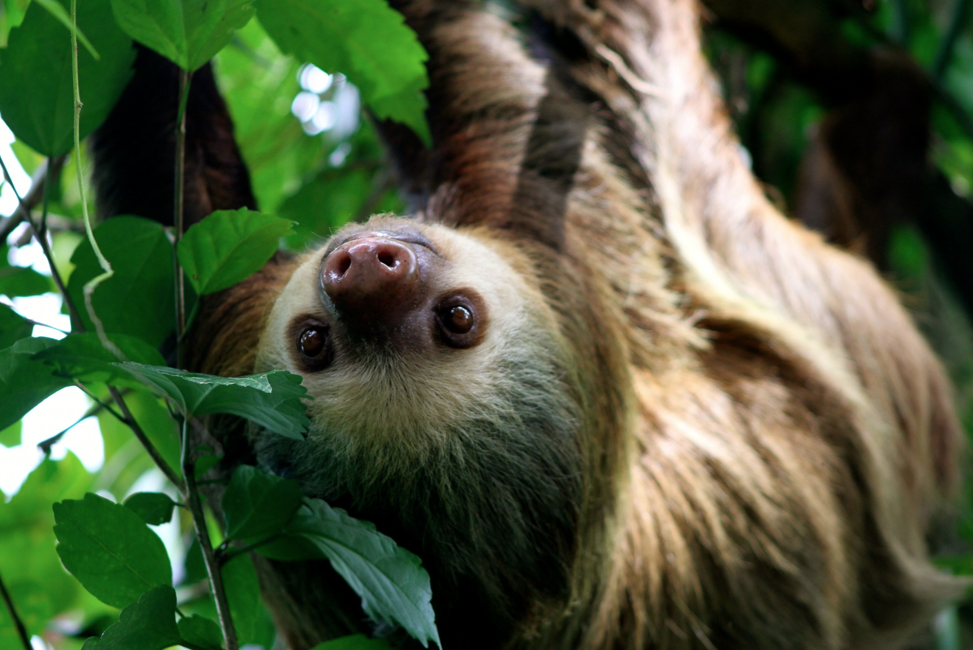
I don’t know how to feel about this one. The skeleton sloth looks relatively happy. Still, if you’re into that sort of thing, pick it up here on Etsy.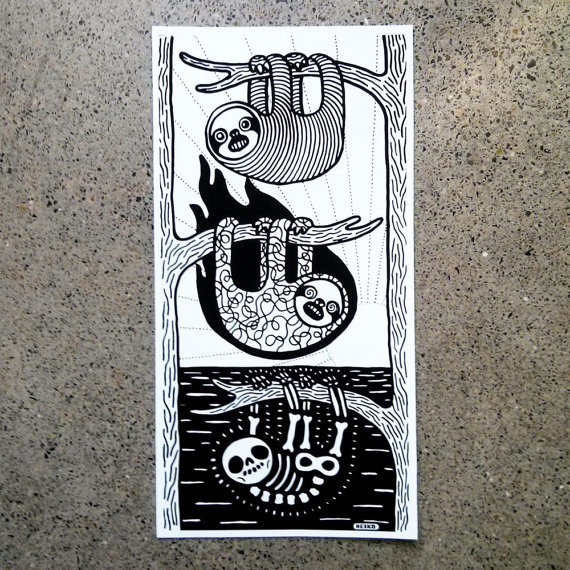
Tag Archives: sloths
Cute Sloth bag from Modcloth
Imagine walking to work every day with this little guy slung over your shoulder 🙂
From Modcloth.
Sloth hair may cure cancer
Is there anything that sloths CAN’T do?
Hens, chicks, and crickets
Long weekend just gone was a busy one! I haven’t posted at all, apologies…
Saturday was an all-day wine tour for a good friend’s hen’s day.
Sunday night I caught up with my best girl who’s just gotten back from a trip overseas. It was sooo good to see her! Had a HUGE Mexican dinner followed by a churros date at Chocolate Taperia.
Then Monday was Australia Day, and our group all spent the day together having a BBQ lunch, playing backyard cricket (new PB woooo) and having a few drinks whilst listening to the JJJ Hottest 100.
Life is better with friends 🙂
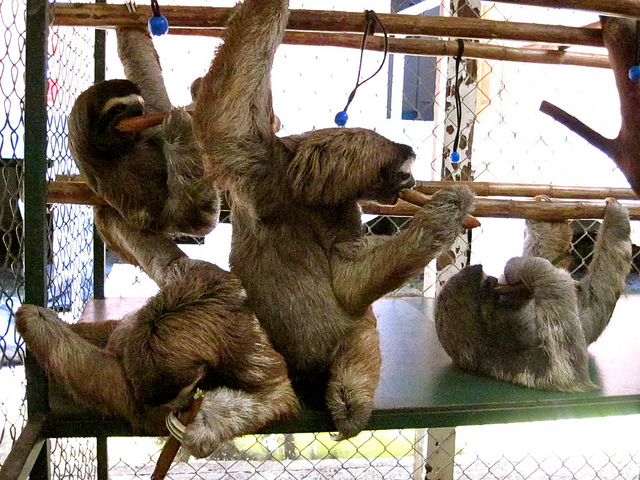
Science is a jerk
Cuz science is a jerk, jerk, jerk, jerk, jerk
And nothing ever works, works, works, works, works…
*buries head in hands*
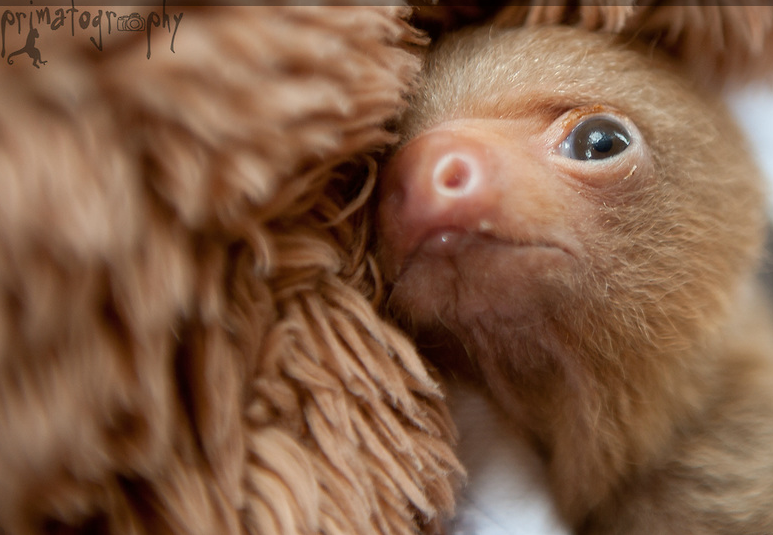
Locket the baby sloth
“[Locket’s] first moments in life were spent face down on a forest floor…covered in dirt and without his mother to clean him or feed him.”
Locket is one of the success stories of the Sloth Institute of Costa Rica, although other baby sloths aren’t so lucky. A first-hand write up on the “best and worst” of 2014 at the Sloth Institute can be read here. I encourage you to please go and check out this article and their website. Sloths aren’t just a cute little face and funny mannerisms. They need our love and support to be around for generations to come.
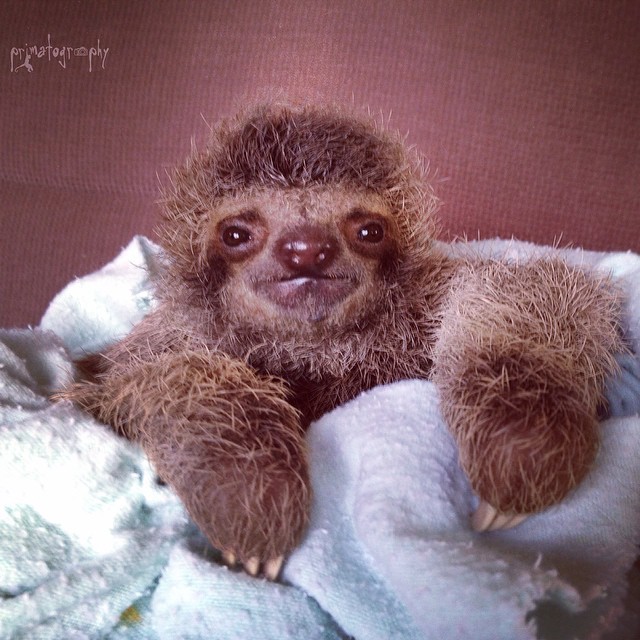 Image from Primatography.com
Dutch TV commercials starring Aart the Sloth
The Dutch company HoyHoy (from what I can interpret using Google Translate) compares prices on home, travel, car and health insurance (like Oz’s cute Meerkat version). Their commercials all feature a sloth named Aart! (Click here for the whole list of commercials on YouTube.)
In this one, Aart has saved some money, but then blown it all on some sloth bitches he met on Sloth Tindr…
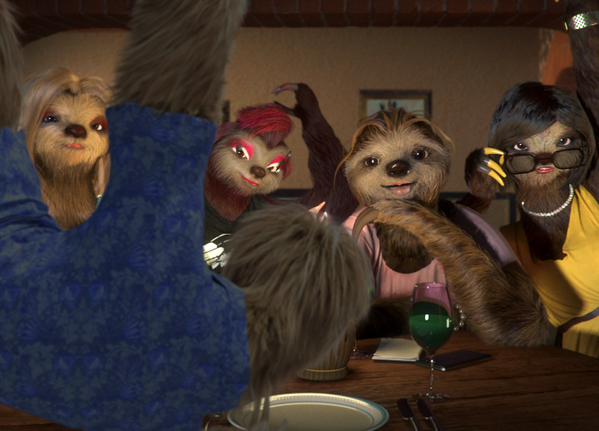
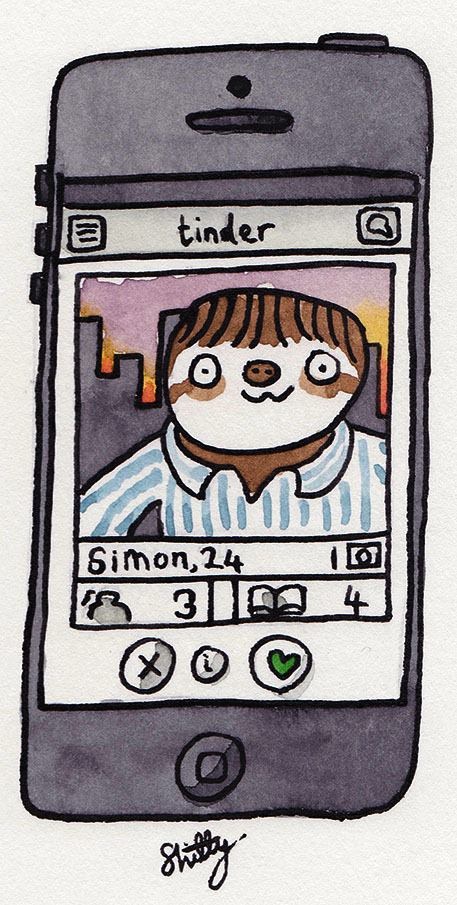
From S.Watercolour.
Sloth Yawn. Can’t Even.
Oh my. Please go to Primatography‘s Tumblr site and watch this video of a sloth yawning. I can’t even.

Friday, Friday, gettin’ down on Friday
The end of the first week back has been felt big time. Slothilda Sloth
How do sloths see the world?
Ever wondered what those gorgeous dark eyes are seeing when a sloth looks out onto the world? Humans are generally trichromats; our retinas possess three types of photoreceptors for recognising colour (“cone” cells), each of which has a different absorption spectra.
Xenarthrans (sloths, armadillos and anteaters) however, are rod monochromats. This condition in humans results in colourblindness, low vision in dim light, and almost complete blindness in bright light.
A new study, published in The Royal Society Proceedings journal, used many different genetic methods to conclusively show that the Hoffmann’s two-toed sloth is a monochromat. Furthermore, they concluded that these sloths have a long history of monochromacy. Based on fossil records, this may be a result of a historically subterranean lifestyle (ground-dwelling), that preceded the arboreal lifestyle (tree-dwelling) they live today, and hence restricted their evolution due to the dim light conditions.
“We searched the genome of…Choloepus hoffmanni (Hoffmann’s two-toed sloth)…for retinal photoreceptor genes and examined them for inactivating mutations. We hypothesize that rod monochromacy…evolved as an adaptation to a subterranean habitat in the early history of Xenarthra. The presence of rod monochromacy has major implications for understanding xenarthran behavioural ecology and evolution.”
So when you look into a sloth’s eyes, what do they see when they look back at you? If it’s day time, probably a light grey, blurry figure. But let’s just pretend otherwise, shall we?